


Your Daily Klyk


Latest Articles
Navigating Tech Depreciation: Maximising Value from Your IT Assets
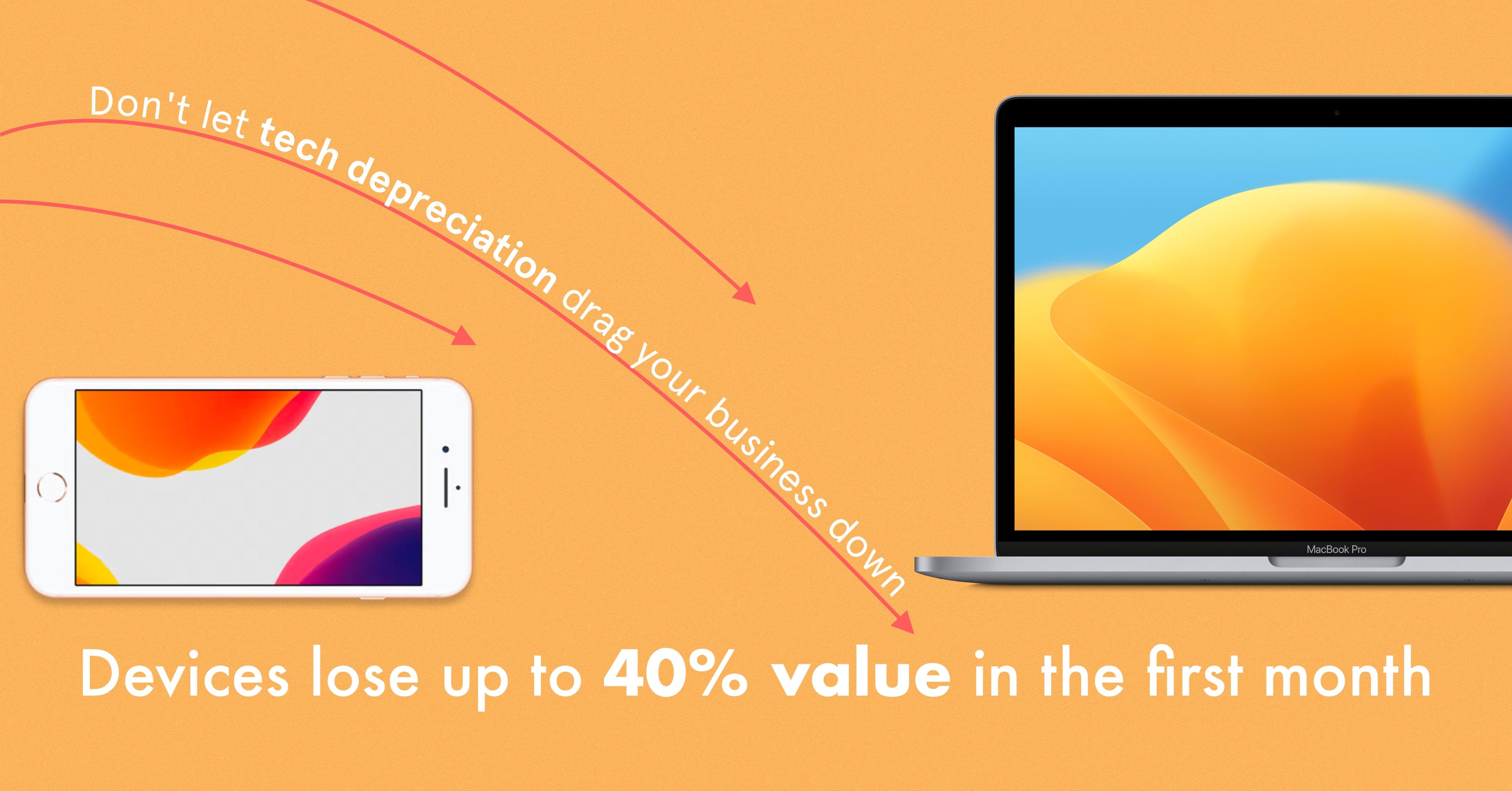
Does tech depreciation factor into your IT budget planning? Are you aware of the total cost of ownership (TCO)? Have you considered how selecting the right tech devices can boost productivity, improve employee satisfaction, and mitigate depreciation costs? Unsure about those questions? This blog is your go-to resource! We're delving into tech depreciation, providing insights that can maximise your IT budget's efficiency. Discover how to turn depreciation from a challenge into an opportunity for sustainability and cost savings. Introduction to Tech Depreciation In an era where technology adoption is rapid, devices depreciate in value just as swiftly. This depreciation isn't just a mere consequence of physical wear and tear; the reduction in value is also influenced by factors such as software updates, market demand, and the introduction of newer models. Some of these are out of your hands. How Tech Depreciation Can Impact Your Business Tech depreciation affects more than just the book value of your assets—it also impacts your company's operational efficiency and budget. For instance, clinging to obsolete technology could lead to increased maintenance costs and decreased productivity due to slower performance or incompatibility with newer software. Understanding Depreciation Rates Every tech device has a depreciation rate, typically calculated as a percentage loss in value over time. For example, studies showed that smartphones could lose about 40% of their value in the first month after release, and up to 80% by the end of the first year. Laptops, on the other hand, might depreciate at a slower pace. Understanding these depreciation rates will help you determine the current value of your devices and make informed decisions about the best time to trade-in & upgrade. Grasping Total Cost of Ownership (TCO) in IT When purchasing tech, it's crucial to go beyond the initial price and understand the Total Cost of Ownership (TCO). This concept encompasses all expenses associated with an IT asset across its lifecycle, from acquisition and deployment to operation, support, and retirement. Understanding TCO allows for smarter tech investments. For instance, a refurbished laptop may have a lower TCO compared to a new one, considering reduced acquisition and retirement costs. This makes refurbished tech a compelling choice for businesses seeking to optimise IT budgets and champion sustainability. Finding the Right Time to Upgrade Knowing when to upgrade your tech assets is crucial. Upgrade too soon, and you might miss out on getting the most out of your current device. Wait too long, and the trade-in value could plummet, while maintenance costs rise. A general rule of thumb is to consider an upgrade when the cost of maintaining a device surpasses its depreciated value or when its performance starts to significantly hamper productivity. This is usually when the cost of replacing the device is more cost effective than repairing it. New devices with energy-efficient chips offer sustainability through reduced power consumption and improved longevity. Coupling this with the use of refurbished tech—pre-owned devices restored to original performance—helps businesses manage tech depreciation, cut costs, reduce e-waste, and contribute to the circular tech economy. Conclusion: Managing Tech Assets Effectively Effectively managing tech depreciation helps you extract maximum value from your devices, optimise your tech budget, and ensure your business stays at the forefront of technological advancement. Remember, depreciation is an inevitable part of tech ownership. But, with the right strategies and understanding tech depreciation, you can turn this from a challenge into an opportunity. By understanding and planning for depreciation, businesses can reduce expenses, increase their return on investment, reduce waste, and contribute to a more sustainable future. At Klyk, we specialise in turning your current tech estate into a more sustainable resource. We offer refurbished & sustainable new laptops as a cost-effective, eco-friendly solution, supplemented with our IT support and cybersecurity services. By working with Klyk, you can manage your environmental impact, save money and keep your business secure. Get in touch with us today to find out how we can help you understand tech depreciation
 Circularity
In today's fast-paced technological landscape, businesses often focus on acquiring the latest computer hardware for their staff. This costly and environmentally unfriendly procurement method is fine for some companies, but others who'd like a more cost-effective approach are missing a massive opportunity. This is an opportunity to save money, follow sustainable business practices, and still provide their team with first-hand equipment and an as-new experience. This untapped opportunity is purchasing excess stock. Excess stock refers to first-hand equipment of previous years' hardware models, such as laptops and monitors, that companies like Apple or HP didn't sell. Due to the current economic downturn manufacturers experienced a major drop in consumer demand, with Apple sales falling 28.7% in Q1 2023 from the previous year. This downturn has increased the chance for businesses to access this excess stock. Allow me to now enlighten you with 4 key reasons why purchasing excess stock is a win-win-win for your bottom line, staff, and the environment. Financial Benefits Businesses can acquire powerful first-hand equipment without breaking the bank when they opt for excess stock, with savings up to 20-30% vs buying new. This is particularly advantageous for start-ups and growing companies that may not have the budget to purchase the latest tech for each new starter. They can access premium products without the premium price tag by choosing excess stock. Phenomenal Quality Despite Age The truth is the rate at which hardware quality improves year-on-year has slowed down significantly. An example of this is Apple’s release of the M1 range. M1 was a revolutionary step forward in computer performance and battery life. However, due to the quality of M1, their next line, M2, has only taken a gradual step forward. Well known tech critics such as Marques Brownlee (also known as MKBHD) have questioned whether it is really necessary for this very expensive, incremental choice of upgrade. Sustainability Matters Embracing excess stock is a sustainable choice. It prevents top-quality devices from being discarded, reduces electronic waste and minimises environmental damage. The latest hardware is created from extremely valuable resources, and purchasing excess stock means your business is taking a significant step forward in adopting sustainable practices. The Creative Industry's Embrace of Sustainable Tech There has been a notable trend with businesses and roles in the creative space utilising sustainable tech. Creatives often need very powerful and expensive devices to do their work. Graphic Designers, Creative Directors, Studio Managers and Art Directors (to name a few), are using programmes that need their hardware to work at a high level. If these businesses need to purchase a lot of this equipment 'brand new', the bill starts rocketing fast. Adopting sustainable tech gives you top-quality products without the top price tags. Klyk: Your Trusted Partner If your business is looking for sustainable, pristine, powerful desktops with amazing specs at a fraction of the price, look no further than Klyk. We have first-hand iMac 27" all-in-one with Intel i7 and i9 from 2021 in stock now. Contact us today, we have further bulk discounts available. It's time to upgrade your team's tech, sustainably.
 Cyber
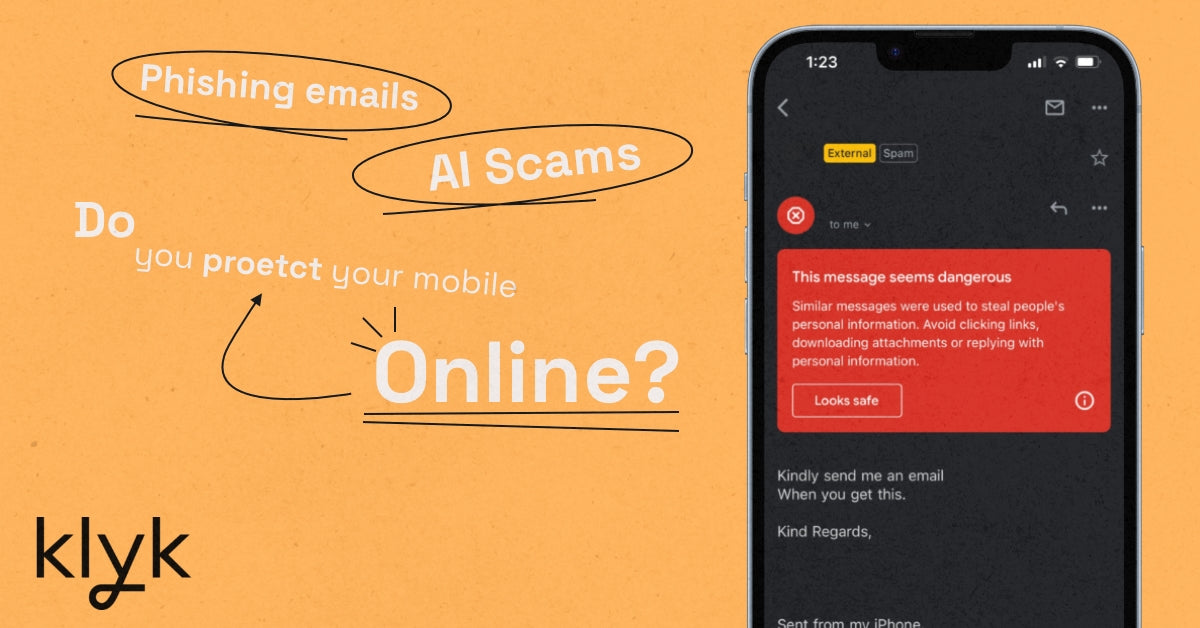
CyberStaying Safe, Avoiding AI Scams, and Protecting Your Data On Mobile
In today's digital age, mobile devices have become essential to our daily lives. From banking, personal use, and work data, we rely on them for almost everything. However, this dependence also makes us vulnerable to various security threats that can compromise our professional and personal information and privacy. This blog discusses security measures you need to take to protect yourself and your mobile devices when online and in the real world. 7 steps to protect yourself and your mobile devices whenever you're online Keep your device up to date One of the easiest ways to ensure your device's security is by keeping its software up-to-date. Manufacturers regularly release updates to fix security vulnerabilities and improve performance. You can switch on automatic updates to ensure your device always has the latest software and security patches. Use a strong, unique password Your device's password is the first line of defence against unauthorised access. Use a strong, unique password with a mix of upper and lowercase letters, numbers, and special characters. Avoid using easily guessable passwords like "123456" or "password." Additionally, don't reuse passwords across different accounts and devices. Always lock your device when not in use to prevent unauthorised access. Use biometric security features like fingerprint or facial recognition, if available, for added security. Install a reliable antivirus app A good antivirus app can help protect your device from malware, viruses, and other threats. Choose a reputable antivirus app from a trusted source and keep it updated to ensure maximum protection. Be careful with app permissions When installing apps, pay attention to the permissions they request. Only grant permissions that are necessary for the app to function and be cautious of apps that ask for excessive permissions. You can manage permissions on almost all Android and iOS device settings. Additionally, only download apps from trusted sources, such as the official app store for your device. AI Voice Dubs Another emerging threat is the use of AI-generated dubbed voices pretending to be family or friends. These voice impersonations can sound uncannily similar to your loved ones, making it difficult to discern whether the person on the other end of the line is genuine. For example, if you get a call from someone claiming to be your sibling and asking for sensitive information or financial help, you can ask them to provide the safe word. If the caller doesn't know the safe word or refuses to share it, you can conclude that the call might be a scam and take appropriate action. Be aware of phishing scams Phishing scams use deceptive emails, texts, and websites to trick users into providing sensitive information or downloading malware. Be cautious of unsolicited messages and verify the sender's identity before clicking links or downloading attachments. For example, you might receive an email from what looks like a manager or CEO asking for a paid task to be completed. Without taking extra precautions, you and whoever else received that email could become part of a scam which could hurt the company. Be cautious of your surroundings when dealing with sensitive data When showing sensitive data on your mobile device in public, you must be aware of your surroundings and take precautions such as using privacy screen protectors & password managers. Password managers are secure, encrypted storage solutions that enable users to store complex passwords and other sensitive data without having to remember them. This eliminates the risk of typing your password in public where it could be seen by potential malicious actors. Stay vigilant and proactive in protecting your personal and work devices, and enjoy the convenience of technology without compromising your security and privacy. Work with a trusted partner While there are numerous steps individuals can take to protect themselves and their devices, the landscape of cybersecurity is constantly evolving, and staying ahead of threats is a demanding task. That's where Klyk steps in. As your trusted partner for IT strategy and security, Klyk provides robust protection for your business. We stay on top of the latest trends and threats, offering advice and solutions that are tailor-made to your specific needs. We ensure that your business is not just reactive, but proactive in its approach to cybersecurity.
 Cyber
CyberWhy Data Strategy and Governance Matters for SMEs
In today's fast-paced digital world, businesses must establish effective data management. A data governance framework paves the way for data-driven decision-making and contributes to a sustainable business model by reducing your company's digital footprint. This blog covers the critical components to implement an effective data strategy. Eliminating Duplicate Systems and Data Duplicate systems and unmanaged data can wreak havoc on a company's efficiency, leading to wasted resources and confusion on the data ‘source of truth’. By eliminating multiple tools that perform the same tasks with potentially conflicting data sources, businesses can remove miscommunication and save time. Furthermore, addressing duplicate data maintains consistency and accuracy, strengthens business decisions and fosters customer trust. The Responsibility to Protect Stakeholders' Data Data security is paramount for businesses of all sizes. A robust data governance framework ensures stakeholders' sensitive information is protected, establishes trust, reduces legal risks, and helps to preserve a company's reputation. The framework should comply with data protection regulations such as the General Data Protection Regulation (GDPR) and industry-specific requirements. You must also have a defined and tested incident response plan to address any data breach to limit the damage to the business and stakeholders. Data governance in Action: Controlling Data Access Managing employee access to sensitive information is a crucial aspect of data governance. Clear data management procedures, regular access control reviews, and comprehensive training on data handling and security best practices all help businesses prevent unauthorised access. An example of how crucial this can be is the exposure if a disgruntled employee with access to social media accounts leaves your business without the proper revoking of access to systems and data. Data Governance to Enable Business Strategy Developing a comprehensive data governance framework positions a business to achieve strategic objectives. This includes defining data standards, quality requirements, architecture, compliance, analytics and reporting. The framework is underpinned by procedures, guidelines, the tools required and skills across the team members. Data is a key differentiator in the market and when the capabilities are defined and utilised, can empower service delivery. Assigning Accountability for Data Data governance also entails designating accountability for data quality, accuracy, and security. Clear lines of responsibility empower team members to uphold data integrity and enable businesses to identify and address issues promptly. For instance, a company might assign a Data Governance Manager or Data Steward to oversee specific data domains and ensure compliance with internal policies and external regulations. In the event of a data breach or non-compliance, businesses without clear accountability could face financial penalties, reputational damage, and a loss of customer trust. On the other hand, those with well-defined responsibilities can quickly address the issue, mitigate the damage, and demonstrate their commitment to data protection and transparency. Prioritising Security in Data Strategy and Governance A robust data security strategy is crucial to protect your organisation from potential breaches and create stakeholder confidence. Employing measures such as encryption, multi-factor authentication, and routine security reviews to safeguard sensitive data are all important steps to take. Moreover, emphasising employee training and awareness to reduce human error and preserve a data protection culture. By embedding security into the fabric of your data strategy and governance framework, businesses can mitigate risks and uphold a reputation for data protection. Reducing Your Digital Footprint: A Sustainable Business Practice Adopting effective data strategy and governance practices streamlines your operations, and contributes to a sustainable business model. By efficiently managing data, companies can reduce their digital footprint thereby decreasing energy consumption. It’s a key step in your sustainable tech journey, demonstrating commitment to responsible business practices. Choose Klyk: Your Trusted Partner for Data Strategy and Governance Klyk is the perfect partner for businesses seeking to implement cutting-edge data strategies and governance frameworks. With a proven track record and years of industry expertise, Klyk transforms companies by streamlining their operations, protecting their data, and ensuring they stay ahead in the digital landscape. Speak to us today!
 Cyber
CyberStart-ups Face Increased Cyber Threat
When starting a business, there's an endless list of things to consider. Creating a genuinely valuable product or service is going to be the highest priority. Have you created something the market needs! If your business is groundbreaking or even just new, you don’t want copy cats stealing your idea to mass produce it cheaper and more quickly. You’ll likely trademark your logo, patent your IP and make sure your brand image is secure. But does all that matter when it can all be undermined with a click of a rogue link? No matter how big you build the physical foundations for your business, unfortunately everything is at risk from a cyber attack. We know you’ve done the Google search and come across some military-grade style software and 100s of Cyber and IT policy examples, often aimed at corporate giants with extensive budgets. And quite rightly, you may have felt a bit lost or confused. We believe businesses of all sizes need to build the appropriate cyber resilience - this starts with a foundation. Whilst this will differ depending on your business and technology estate, we'd like to recommend these initial steps to get you started. 7 Steps to Establish a Cyber Foundation 1. Activate Two-Factor Authentication (2FA) Two-Factor Authentication (2FA) creates a secondary defence against any weaknesses in login credentials and allows you to act fast if a breach occurs. 2FA is customisable on most platforms allowing for great security and peace of mind that your systems and data are that much more protected. 2. Determine whether BYOD is appropriate for your business Bring your own device (BYOD) policies should be established to help manage the use of personal devices for work purposes. Start-up’s should ensure that devices used for work are secure and meet your cyber policy. There are some occasions where BYOD is not recommended, such as in highly regulated environments or if employees need to access highly sensitive or confidential information. IT policies can answer most questions about BYOD do's and don'ts, which mandate to enforce the requirements. 3. Password Manager Implementing a password manager can help small businesses manage their credentials and safeguard accounts. A password manager can help employees create and store strong passwords. You should carefully research a password manager that is suitable for your needs and can be customised to allow and disable access. 4. Securing Wi-Fi Connectivity Securing Wi-Fi connectivity is crucial for businesses. By securing your Wi-Fi, you can prevent unauthorised access and protect their data from being intercepted. With the rise of remote work, getting a VPN ensures that employees are accessing company data over a secure connection even when they are working away from the office. 5. Training & Resources By providing regular training and resources, you can empower your employees with the knowledge and skills to identify and appropriately respond to potential threats, protect their devices, data, and network. Investing in cyber awareness will safeguard your business and promote a cyber conscious culture within your organisation. 6. Turn on automatic backups By enabling automatic backups, you have the most recent copy of your document if you experience technical failure or a system is unavailable. By using cloud accounts you can make sure your work is accessible from other trusted devices if needed. You can manage device and document back ups and frequency in most system or app settings, and we also recommend doing a manual back up at least once a month. 7. Selecting the right partners Working with third-party suppliers can be an essential part of expanding your business, but its important to understand their cyber capabilities. When selecting a third-party supplier, it's crucial to thoroughly assess their cybersecurity practices and policies, as well as their adherence to relevant regulatory requirements. You should also ensure they have adequate security measures in place to protect any sensitive data or information the third-party may be handling on your behalf. In conclusion Startups face different cyber challenges compared to larger enterprises, such as not having the resources to hire a cyber security team in-house, which in itself makes a small business an easy target for the attacker. However, by defining a realistic approach to cyber resilience and following good practice - such as the above steps - businesses can start to protect themselves from cyber threats. With an IT & Cyber policy you can establish and mandate the rules for how technology and cyber are operated to protect organisational data, systems and assets. These initial steps should help your business build a cyber resilience foundation, however cyber is a journey and you constantly need to increase your resilience through governance, tools, processes and awareness. If you would like to learn more about cyber resilience and how you can incorporate it into your business, book a call with one of our experts today.
Clean Is The New Green - Apple Introduces Clean Energy Charging
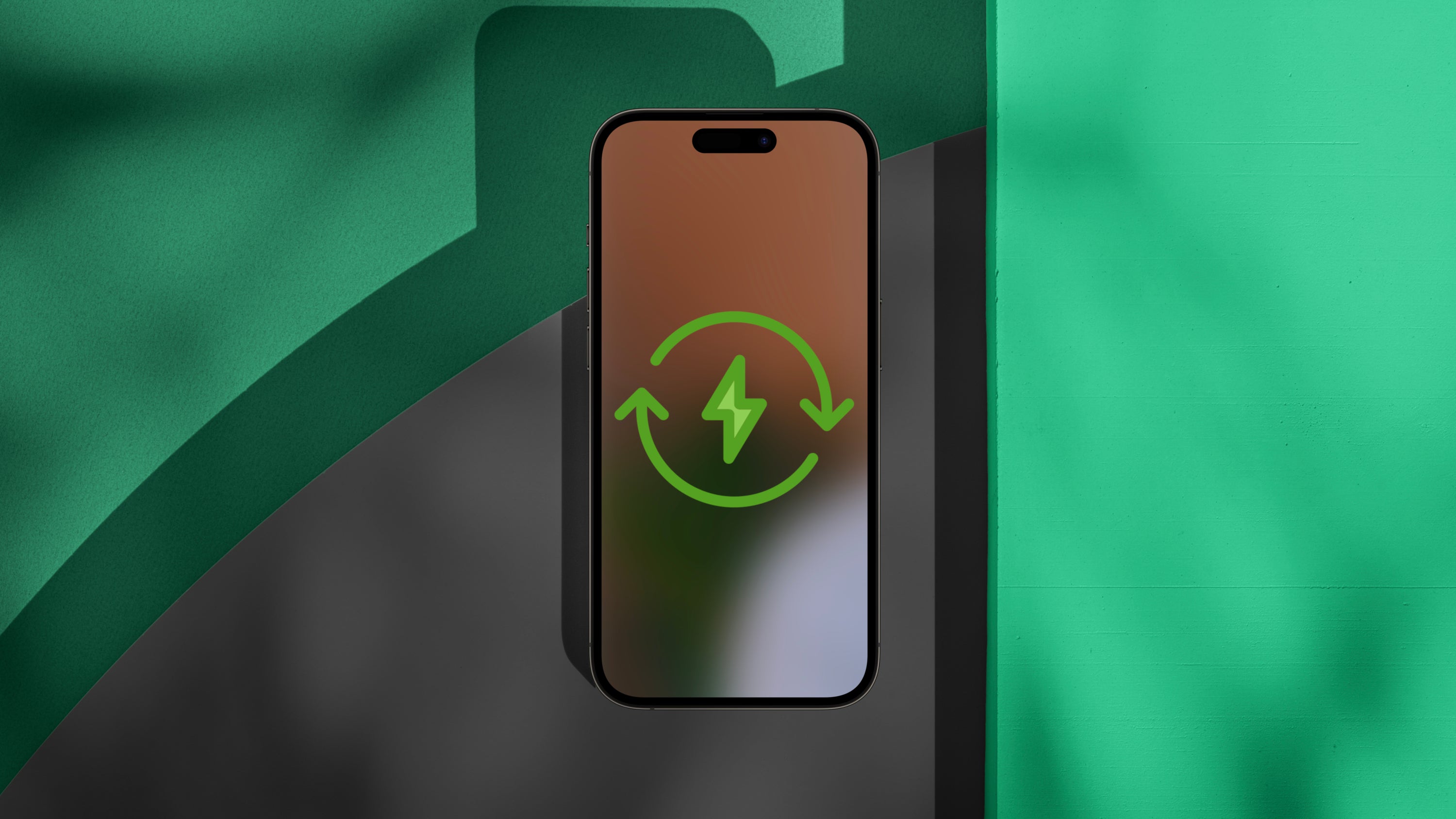
Energy consumption during peak hours is a pressing issue for energy grids worldwide. The UK in particular has had to deal with spikes in demand during commercial breaks and the use of multiple devices. While the world is moving towards clean energy sources, our reliance on fossil fuels isn’t reducing quickly enough. Therefore, reducing energy consumption is crucial to lessen the impact on the environment. With households owning an average of 5-7 devices, how we charge those devices can make a significant impact. Apple is taking smart steps to help people reduce their carbon footprint, by enabling ‘Clean Energy Charging’, a new feature that is baked into iOS 16.1. Right now, this feature is only available in the US, but it will likely be expanded to other countries in the future, and we like to highlight new features like this, since sustainability should be at the top of every company's agenda. The feature is enabled by default with iOS 16.1, so if you are in the US you'd have seen a notification about Clean Energy Charging and when it's active. Apple says the feature will work like this - “When Clean Energy Charging is enabled and you connect your iPhone to a charger, your iPhone gets a forecast of the carbon emissions in your local energy grid and uses it to charge your iPhone during times of cleaner energy production.” The feature can be overridden by tapping on the notification if you plug in at a demanding time, or turned off completely in settings if you really need to have 100% charge before you leave. It’s positive to see Apple's sustainability mission continuing with another great feature. Although we hope that they will bring this feature to more countries with future iOS releases, the fact that the feature works and it is available is a positive step forward. Will you use this feature when it becomes available?
 News
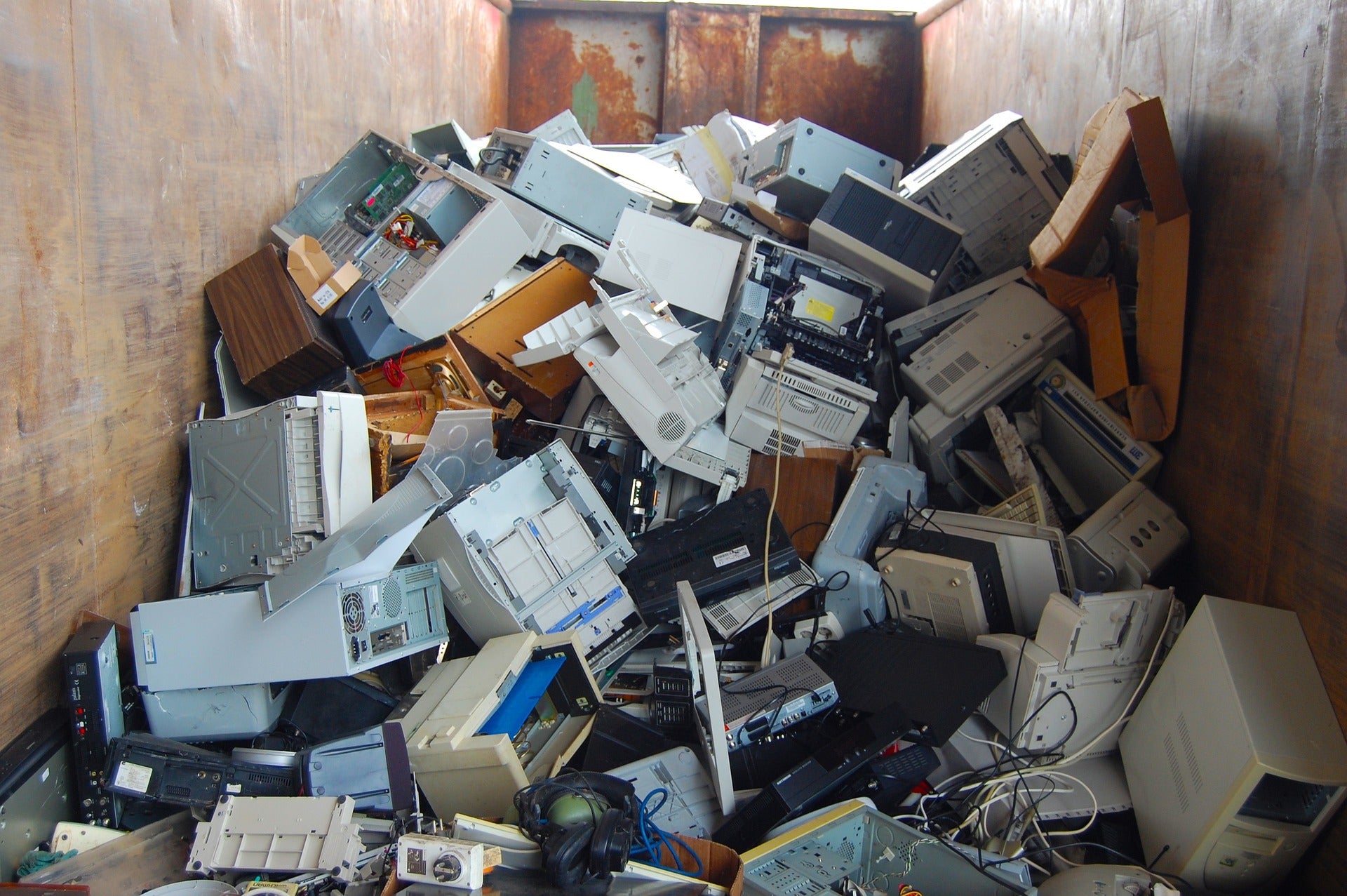
NewsUK on track to become the worst culprit for e-waste
The term e-waste is fairly well known, but few realise the extent of the problem. Per capita, the UK is the second largest producer of e-waste in the world, and unless we take drastic measures over the next year, we will overtake Norway at the top of the table. The ProblemAccording to The Tech-recirculation, the amount of e-waste an average UK citizen produces will rise from 23.9kg to 24.5kg by 2024. Electronic waste isn’t the only issue at play here. Inside these devices are rare materials, often mined in war-torn countries, which eventually end up in landfill. Materials like Gold, Gadolinium & Lanthanum are used in motherboards and other parts of devices, and without being properly recycled some of these rare materials are set to run out by the end of the century. What can you do to help?Currently, only between 2.5 and 10% of electronics in the UK are reused, ranging from monitors to window displays and till systems. Cleaning out your old tech drawer at home and any tech lying around at work is a good idea, so you can recycle or sell any devices that are gathering dust. It doesn’t matter how old your device is or even whether it still works or not – the materials inside the device could be of value to you and the future of our planet. Did you know you could save up to 200kg of CO2 emissions and 1.5kg of e-waste by buying a refurbished laptop instead of a brand new one? This is a smart choice for individuals and an even smarter choice for businesses regularly buying tech for their employees. If you do want to buy a brand new device, you can still make a sustainable choice. Manufacturers such as Apple and Dell are changing the way their products are manufactured to ensure they run more efficiently, while still delivering equivalent performance by using sustainable materials and custom built chipsets. The Impact We can collectively make a difference by becoming more conscious of how we buy and recycle our technology. As a planet, we can become more circular with our buying habits by changing our perspective on used tech, making sure to properly recycle, repair or pass down our tech so it lives longer and we can extract the materials for tech in the future. Have you recycled any tech recently? What’s your company’s approach to sustainability with IT? Get in touch if you would like to learn more.
 Impact
Klyk partners with Community TechAid
Today we’re incredibly excited to announce our new partnership with Community TechAid.Community TechAid is a charity based in South London on a mission to close the digital divide by providing technology and digital skills to local communities. We share the common goal of reducing e-waste, which is what makes this such a great partnership. At Klyk, we do that by helping businesses adopt a sustainable and circular approach to their hardware. Community TechAid achieves this by giving devices, which would otherwise be unused or thrown away, another life in the hands of people who need them. What is the Digital Divide? The Digital Divide is defined as the gap between people who have access to digital technology and services, and those who don’t. Could you imagine living just a day without your phone? Unfortunately, for so many people that is their permanent reality. Without a suitable device, it’s incredibly difficult to access healthcare, housing and benefits services, apply for jobs, keep in touch with friends and family, and much more. Having a phone is a crucial first step on the path towards establishing a better life. Over the coming months, our goal is to source 180 smartphones for Community TechAid. That will be 180 lives improved through access to technology. Asad Hamir, Co-founder at Klyk, said: “The pandemic brought the digital divide into sharp focus, and despite it now falling down the news agenda, the problem has not gone away. Coming from an ethnic minority background, this problem is close to my heart and one I want Klyk to impact. “I’ve been inspired by the incredible work Community TechAid does and the tangible impact it has on people’s lives. "The fact that we share the same goal of reducing e-waste makes this the perfect partnership. Our focus will be on educating and engaging our customers about the Digital Divide, e-waste, and the impact we can have by simply donating the tech we no longer need.” Stephanie Charbine at Community TechAid, added: “We are really excited about our partnership with Klyk. We both understand that the circular economy is key to addressing digital inequalities and are delighted to be working alongside Asad and the team to make a real impact in our community. “At Community TechAid we see firsthand how the digital divide contributes to existing barriers, preventing people from developing the skills and opportunities they need to thrive. Lack of access impacts all aspects of daily life, from managing finances to accessing education and healthcare, and as the cost of living escalates we are seeing more and more people pushed into digital poverty. “We have over 150 people in desperate need of a smartphone, and we know that this is just a snapshot. By partnering with Klyk not only we will be able to support people online but make a real difference to our waste economy by reusing and repairing devices.” How can you help? The focus right now is to source 180 smartphones, ideally iPhone 8 or above. That said, other phones, laptops and tablets are also really helpful. Is your business sitting on a bunch of unused devices? Have you got an old phone or two sitting in a drawer at home? Please take just a couple of minutes to have a look. It really could change someone’s life. If you have something to donate, please get in touch via impact@helloklyk.com and we’ll arrange a collection! We’ll be reporting back regularly on the progress we’re making. Thanks in advance for your support!
 News
NewsCES Recap - Ride Into The Future
Although CES doesn't have a big focus on sustainability (yet), we went through the news to find out what some brands are doing to lead a more sustainable future. Find out what we thought were the three most innovative sustainable projects at CES 23
 News
NewsThe Last Laptop You'll Ever Need?
First, gone were the days of consumers being able to repair their own devices. Then gone were the days of repairability, with retailers and manufacturers readily swapping out whole devices for only minor issues. Now we appear to be coming full circle, with the right to self-repair on the legislative agenda. And Dell might just have the solution to how the industry will evolve to meet this challenge. Early movers For many years, Google developed the Project Ara concept phone, whose components can be swapped out depending on the user's needs. Upgrade your camera or battery life within seconds and give your phone a whole new lease of life. But smartphone design changed so rapidly, faster than even a modular phone could keep up with, making this dream short-lived. Similarly, Framework is changing the way we think about upgrading our technology. Framework provides modular laptops that you can upgrade and repair by yourself. No expertise is needed and new component offerings are released on a regular basis. Although Framework laptops have good features, some have questioned their design and solidity, raising the question of the tradeoff between sustainability and the importance of a premium look and feel. Enter Luna Now, Dell has entered the modular space. Concept Luna is the kind of laptop that can be upgraded time and time again, taking a smaller toll on the environment each time. The whole device can be disassembled in seconds, making it incredibly easy to repair, upgrade and recycle. Dell has even commissioned a robot micro-factory, meaning the Luna could be easily tested and disassembled by robots. Dell recognises that not all components reach end of life at the same time, so as part of its efforts to reduce e-waste and ensure rare components are recovered in the best way possible, the company has explored how the Luna could be serviced by only replacing the parts that need to be replaced. While seeing a leader like Dell innovating in the sustainability space is a great step in the right direction, a concept is still just a concept. We are still a long way away from seeing truly modular devices with ultimate upgradeability, which can go toe to toe with the quality of design and build quality of traditionally-manufactured alternatives.
 News
NewsApple Self Service Repair Comes To Europe
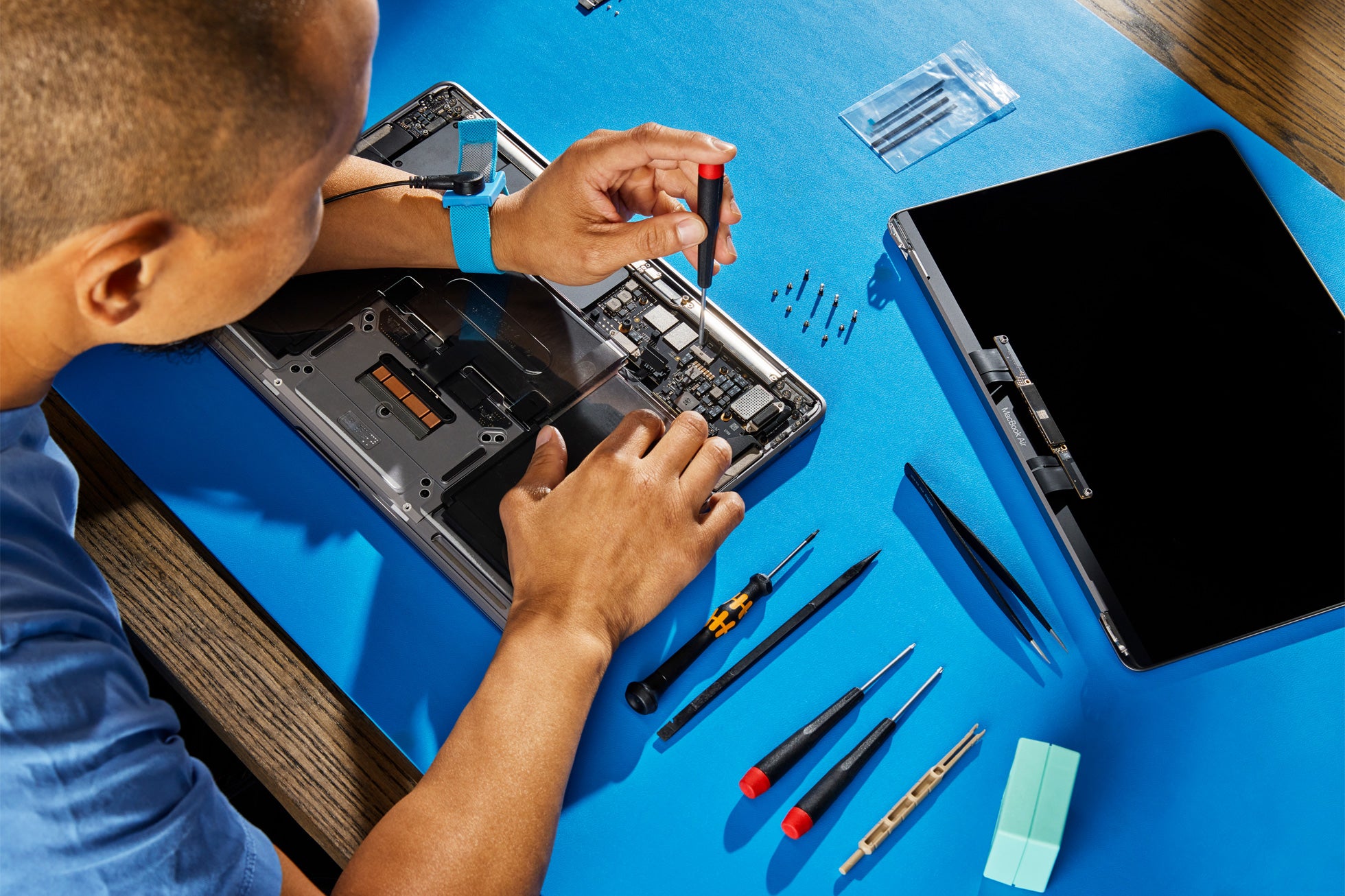
It was announced this week that Apple has extended its self-repair programme to Europe, allowing consumers to purchase parts and manuals from home so they can fix their products themselves. Over the past few years, there has been a growing movement for the right to repair. Supported by companies like Back Market & iFixit, this movement has put Apple in the spotlight. Every year, Apple makes some peculiar design decisions that aren't helpful to repair shops or consumers who might accidentally damage or break their devices. While not easy, it is possible to fix Apple devices, but despite Genius Bar prices driving people to independent repair shops, they do not always have access to the right tools to complete a full repair. That changed earlier this year as Apple announced its self-repair programme in the US, allowing consumers and repair shops to purchase the correct tools and equipment to repair devices, starting with iPhone 12 and M1 MacBooks. Throughout the year Apple has expanded the repair programme to newer devices including iPhone 13 and M1 Pro and M1 Max MacBook Pros. Finally, the expansion of the program has reached Europe. Apple has been heavily invested in becoming more sustainable with its practices and the right to repair has been a big part of it. Being able to replace parts and fix devices helps reduce e-waste dramatically as it means devices will last longer and won't need to be replaced as often. As part of the repair programme, Apple offers credit for customers who send back their old or broken parts so they can be recycled correctly. This is most likely using their robot "Daisy" who can remove rare materials such as gold, neodymium, europium & terbium from devices. Apple's statement: “We believe the best technology for our customers and for the planet is technology that lasts, which is why we design our products to be durable and rarely require maintenance or repair,” said Jeff Williams, Apple’s chief operating officer. “But when a repair is needed, we want customers to have many options for safe, reliable, and secure repair. That’s why we’re excited to launch Self Service Repair in Europe, giving our customers direct access to genuine Apple parts, tools, and manuals.” For us at Klyk, this is positive news as it helps reduce the impact of technology on the planet. It also gives repair shops and refurbishers better access to manuals and genuine parts. While there is still more work to be done in this area by many high-profile companies, it's inspiring to see Apple leading the way for others to follow. See the full press release here: https://www.apple.com/uk/newsroom/2022/12/apple-launches-self-service-repair-in-europe/