


Sooner or later every growing business faces the same question: do we give people work phones, or do we let them use their own?
It's usually treated as a cost decision — buy phones, or don't — and BYOD (bring your own device) wins that round easily.
But the real differences sit below the sticker price: tax, security, business continuity, employee wellbeing, sustainability, and the question of who owns the work number when someone leaves. None of the options is free of downsides. The right answer depends on your team - and the only genuinely wrong move is choosing by default.
Here's the full picture, so you can decide with eyes open.

The trade-offs that don't show on the spreadsheet
The hardware cost is the easy number. These are the ones that decide it — and each cuts both ways.
- Business continuity. A personal phone that breaks is the employee's problem to fix, and your productivity that suffers while they do.
- Security and data. On a device you don't own, you can't reliably enforce encryption, updates, or a clean wipe — and a lost personal phone often gets reported late, opening a real exposure window under UK GDPR. A company-controlled device closes that gap.
- Who owns the number. A number on a personal contract walks out with the employee, customers and all.
- Tax. a phone or SIM in the employee's name and reimbursed is usually taxable, while one in the company's name is not.
- Wellbeing. A single personal number means work never really switches off, which feeds burnout. A separate work line — on a company phone or a business eSIM — can be silenced in the evening. Then again, a second physical phone is one more thing to carry, and some people would genuinely rather have one device and set their own boundaries.
Hold those up against each option below, and the right fit usually becomes clearer.
Option 1: BYOD — employees use their own phones
The employee uses their personal handset and contract; the business pays a monthly allowance or reimburses costs where required.
Where it wins. No hardware to buy, one phone to carry, instant setup, and people using the device they already know and like. For small, trust-based teams in low-risk roles, it can be perfectly sensible — and the autonomy is genuinely popular.
Where it bites. Three mechanics catch SMEs out:
- The tax trap. A cash phone allowance is treated as salary — taxed through PAYE, with National Insurance on top. Reimbursing a personal contract is also a taxable benefit; only separately identifiable business calls can be paid tax-free, which bundled tariffs make all but impossible to prove. HMRC takes a strict line: one firm reimbursing a single £30-a-month personal contract faced a grossed-up assessment of around £1,600 over four years — for one employee.
- You don't own the number. A customer-facing number on a personal contract is the employee's, and leaves with them.
- Company data on a device you don't control, which remains your responsibility under UK GDPR.
Option 2: A business eSIM on the employee's own phone
This is the option most SMEs don't know exists, and it sits neatly between the other two.
The employee keeps their own handset and personal number. The business adds a second line — a business eSIM in the company's name — to the same phone. Modern phones can run two lines at once: personal on one, work on the other, with separate numbers, separate billing, and a clean split.
Where it wins. You keep the number (it sits on the company's account, so it can be suspended or reassigned when someone leaves); it's tax-efficient (a SIM or eSIM in the company's name qualifies for the same exemption as a full company phone); there's no hardware cost and only one phone to carry; the work line can be switched off in the evening; and because it's a corporate line, you can add inclusive or pooled roaming rather than reimbursing personal roaming abroad.
Where it bites. The phone must be unlocked and eSIM-capable; only one line uses mobile data at a time; a work line doesn't secure work data on its own (you'll still want app-level management); and because the handset is the employee's, it does nothing for the continuity or tech-baseline questions above.
Option 3: Company-owned phones
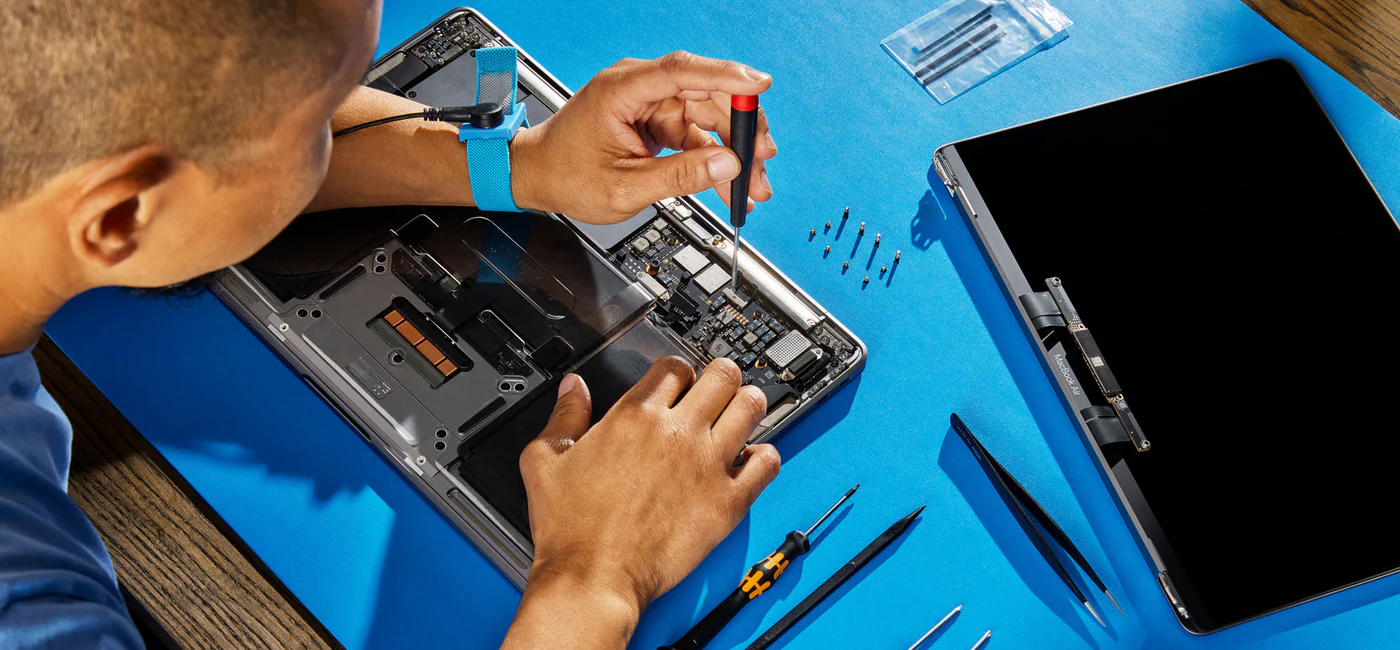
The business buys the handset, holds the contract, and issues the phone.
Where it wins. Full control of the device, number, data, and security. You can manage and wipe a lost handset, standardise the fleet to a reliable spec and keep the number when someone leaves. It's tax-efficient (one phone per employee on a company contract is exempt from benefit-in-kind tax), and a refurbished or circular fleet keeps cost and carbon down.
Where it bites. It costs more up front, and ties up capital. Your people carry two phones — which many quietly resent. There's a fleet to procure, manage, and eventually dispose of responsibly.
The tax reality most SMEs get wrong
It's worth being precise about this, because it genuinely shifts the cost comparison.
In the UK, tax laws enable an employer to provide one mobile phone or SIM per employee free of tax — no income tax, no National Insurance — as long as the contract is in the companies name. That covers the handset, the line rental, and all calls, including personal use.
The moment the contract is in the employee's name and you pay or reimburse it, the exemption is gone and it becomes taxable. A cash allowance is simply salary. It doesn't make BYOD wrong — but it does mean the "cheaper" route is often less cheap than the spreadsheet suggests once tax is counted.
Security and privacy: MDM vs MAM
Whichever route you choose, company data on a phone is your responsibility under UK GDPR.
On a company-owned phone, full mobile device management (MDM) is straightforward — it's your device. On a personal phone, full MDM is intrusive, and employees rightly resist handing control of their own handset to an employer. The middle path is mobile application management (MAM): you secure and manage only the work container — email, work apps, company data — and leave the rest of the phone alone.
This cuts both ways, which is the point worth making to anxious staff: MAM protects the employee's privacy as much as it protects company data. It can't see their photos, browsing, location, or personal messages — only the work apps — and it lets you wipe company data when someone leaves without touching anything personal. For any BYOD or eSIM setup, MAM, with data-loss prevention switched on, is what makes it safe for both sides.
So which should you choose?
There's no universal answer — it depends on the role and the risk. The table below lays the three side by side; the trade-offs section above is how you weigh them.
| BYOD (personal contract) | Business eSIM on own phone | Company-owned phone | |
|---|---|---|---|
| Who owns the number | Employee | Company | Company |
| Hardware cost | None | None | Company buys or leases |
| UK tax | Allowance/reimbursement usually taxable | Tax-free (line in company's name) | Tax Free (1 per employee) |
| Control & security | Limited | Work line & data via MAM, device stays personal | Full MDM |
| If the phone breaks | Employee's problem; downtime | Line re-provisioned; handset is theirs | Hot swap |
| Roaming / travel | Personal roaming, often charged | Corporate roaming on the work line | Corporate roaming, pooled |
| When they leave | Wipe on trust, number leaves | Suspend/reassign line | Return device, keep number |
A reasonable rule of thumb: company-owned phones earn their cost for field, frontline, and customer-facing staff, where control, continuity, and number ownership matter most. The business eSIM model fits desk-based and hybrid teams who'd rather carry one phone but still want the number, the tax efficiency, and a line they can switch off. BYOD on personal contracts can be the right call for small, low-risk, trust-based teams who value autonomy — provided you go in aware of the tax, the number, and the data exposure, rather than assuming it's simply free.
Most businesses land on a mix. That's fine — as long as it's a deliberate choice, weighed against the trade-offs above, rather than a default, or a vendor's preference.
Where Klyk comes in
There's no one right answer — so we start by understanding your business.
We'll look at how your team actually works — who's field-based, who's at a desk, who travels, who's customer-facing — and design a mobile model that fits: company phones, business eSIMs, or BYOD. And we manage it end to end — security and privacy, roaming, joiners and leavers, and responsible refurbishment or recycling at end of life.
Get in touch and we'll talk through what your team actually needs, and build the right setup around it.